

Enterprise Application Development
Build Enterprise Systems Without Fragmentation
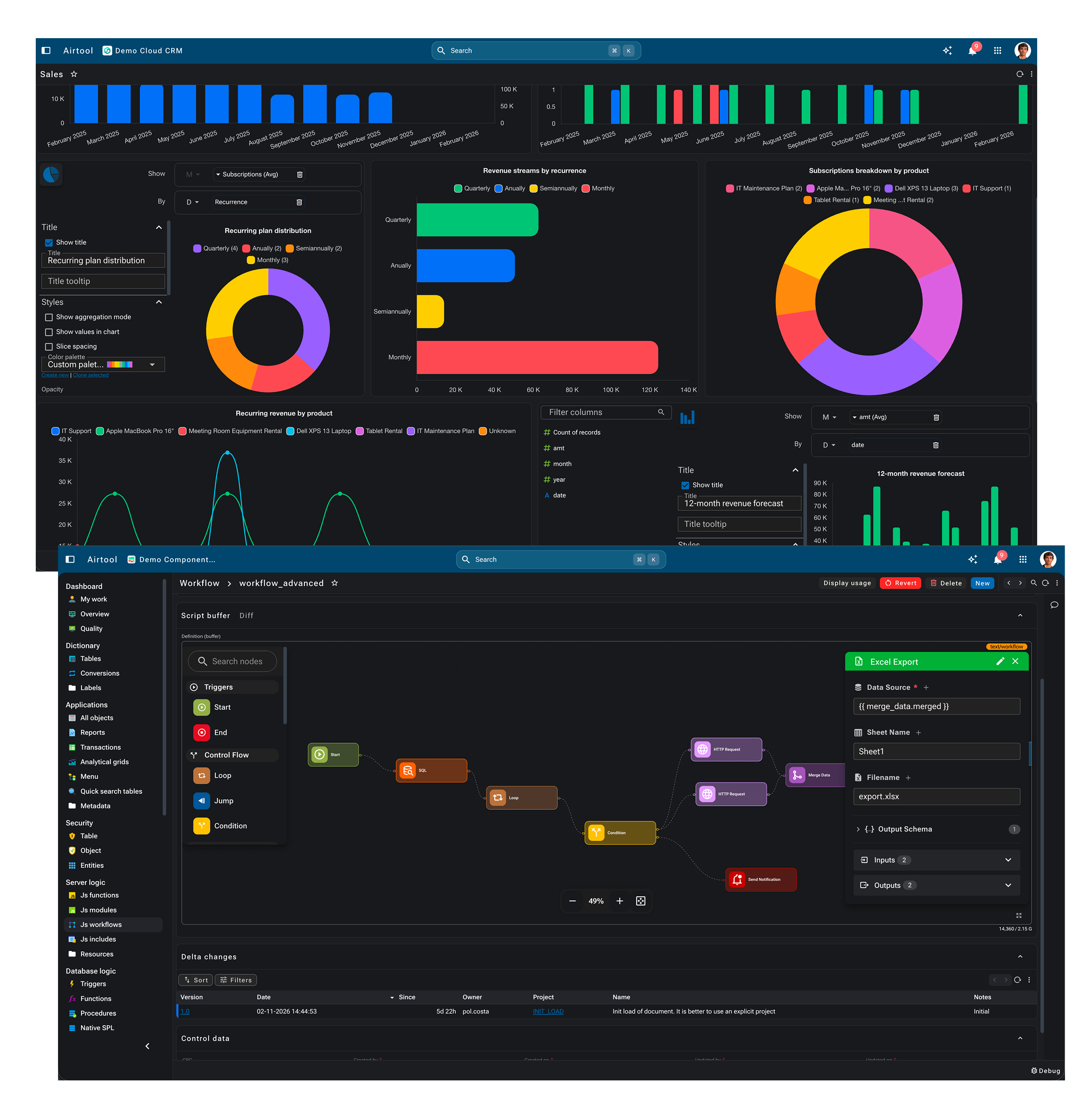
Airtool provides a unified development environment for building large-scale enterprise applications without duplicating frontend, middleware, and reporting layers. Applications are defined through metadata-driven models and executed within a governed runtime, reducing architectural complexity while strengthening long-term control.
Model Architecture
Define Once. Execute Everywhere.
Airtool applications are built by defining structured models for data, workflows, interfaces, reporting, and access policies. These definitions generate forms, transactions, screens, navigation, and APIs without duplicating UI and backend logic.

Structured data entity modeling
Centralized workflow definitions
Unified reporting and access

Data And Workflow Modeling
Define entities, relationships, constraints, and business workflows centrally.

Generated Enterprise Interface Layer
Forms, transactions, screens generated from structured metadata.

Unified Logic And APIs
Backend logic and APIs derived consistently.
Frontend Simplification
Eliminate Frontend Fragmentation Entirely
Traditional enterprise systems depend on dedicated frontend teams, short-lifecycle JavaScript frameworks, custom component libraries, and duplicated validation logic. Airtool generates the entire UI layer from metadata, centralizing behavior, permissions, and formatting.
Remove dedicated frontend teams
Avoid framework obsolescence cycles
Centralize UX standards platform-wide
Define validation logic once
.jpg)
Enterprise UI
Enterprise Interfaces Without Code Duplication
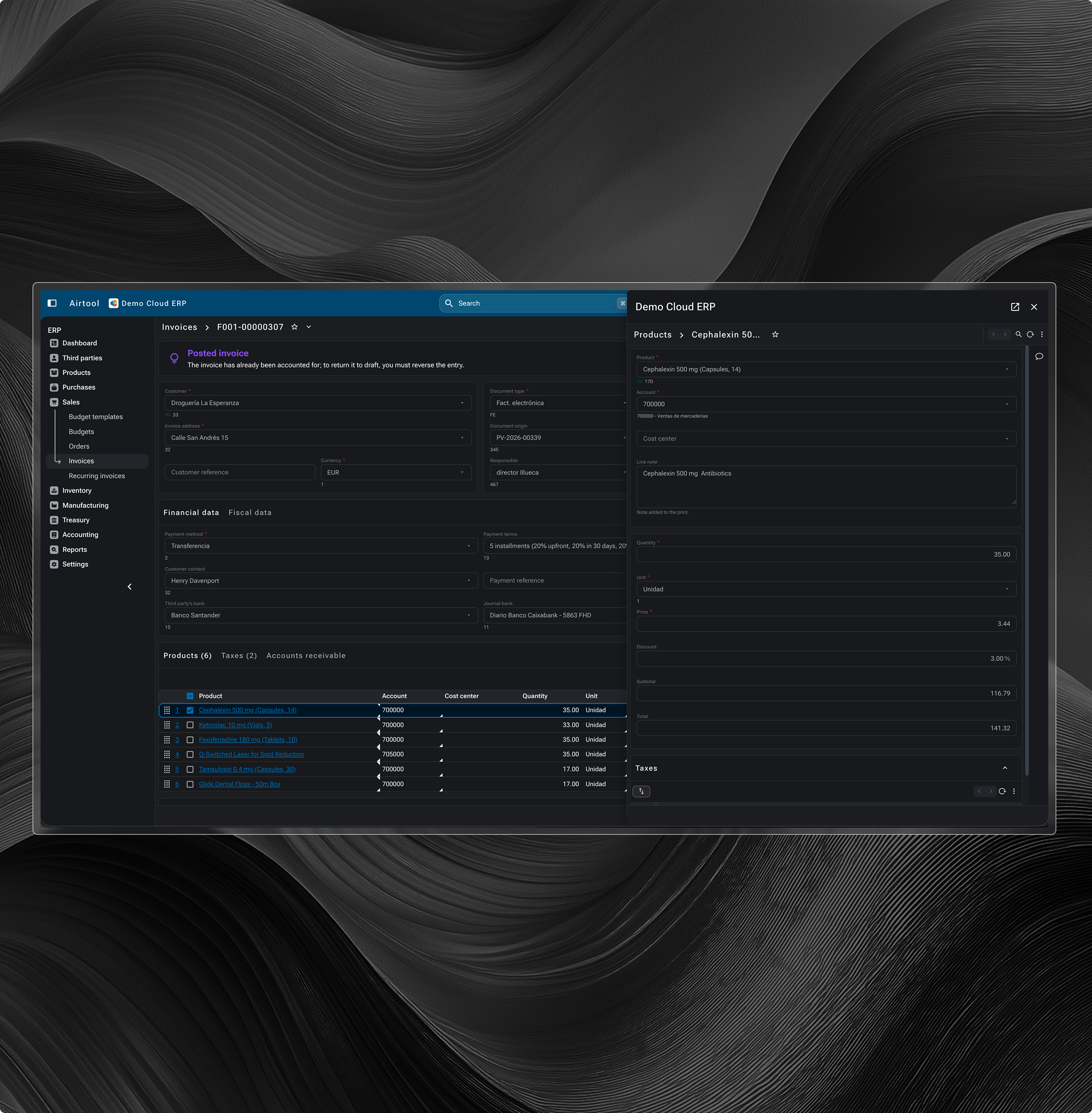
Airtool’s UI engine supports complex transactional forms, master-detail relationships, dynamic layouts, inline validations, and data-aware inputs. Internationalization is native, with runtime language switching and locale-aware formatting without manual frontend coding.
Complex transactional form support
Master-detail relational interfaces
Built-in internationalization architecture
Metadata-driven validation and layout
Continuous Evolution
Evolve Applications Without Downtime
Enterprise systems must adapt without disrupting operations. Airtool enables live application changes, UI modifications without redeployment, controlled version transitions, and rolling runtime updates while systems remain continuously available.
Apply live application changes
Modify UI without redeployment
Support controlled version transitions
Execute rolling runtime updates
Business Logic Orchestration
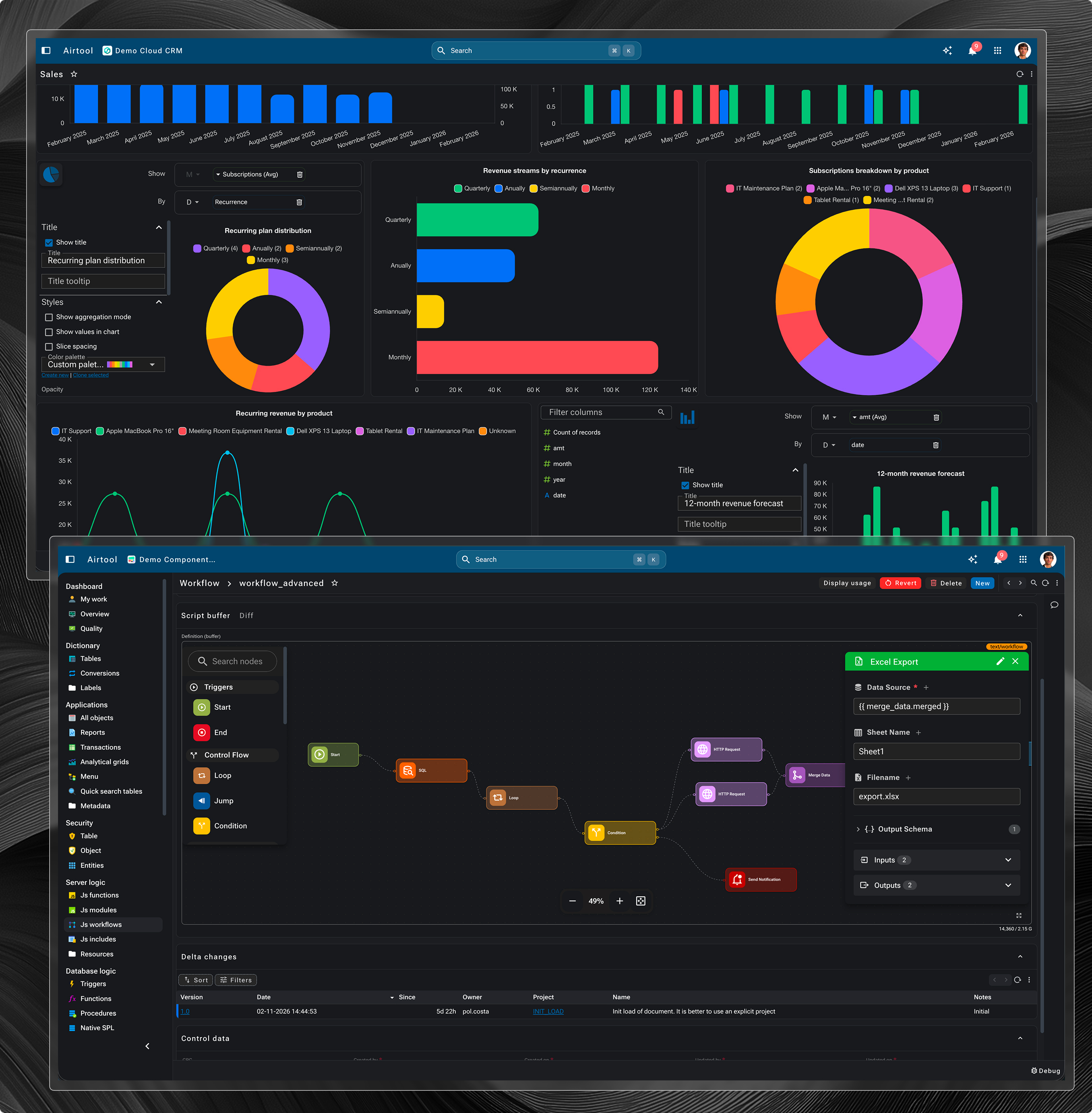
Airtool orchestrates application layer logic using server-side JavaScript, database enforcement through SPL, triggers, and constraints, and runtime permissions, audit, and validation to ensure centralized control, transactional consistency, and enterprise-grade governance.
Server-side workflow orchestration logic
Database-level transactional integrity enforcement
Runtime permissions and validation control
.jpg)
Minimize Architectural Fragmentation
Replace Fragmented Stacks With Governed Coherence
Traditional enterprise development

Duplicated Frontend Logic
Separate UI layers replicate validation, formatting, and business rules inconsistently.
Scattered Workflow Services
Simple processes split across disconnected microservices increase orchestration complexity.
External Reporting Dependencies
Operational data exported to separate BI platforms creates duplication.
Shadow Interface Rules
Permission logic and UI behavior diverge from backend enforcement.
Inconsistent Validation Enforcement
Validation rules implemented differently across frontend and backend layers.
AIRTOOL development Platform

Unified Interface Generation
UI, validation, and permissions defined once through metadata-driven architecture.
Centralized Workflow Orchestration
Business processes executed within one governed runtime layer.
Integrated Reporting Engine
Operational analytics run directly inside the application context.
Single Authorization Framework
Permissions enforced consistently across UI, API, reporting, and AI.
Governed Validation Model
Validation logic applied uniformly at runtime execution layer.
Built For Long-Term Enterprise Systems
Engineered for operational durability, governance, and multi-year evolution.

Operational System Design
Airtool is built for ERP-grade transactional systems, warehouse operations, billing engines, and regulated workflows requiring multi-year stability and consistent execution integrity.
ERP-grade transactional workloads
Warehouse and logistics operations
Billing and invoicing engines

Governed Development Lifecycle
Application definitions are governed inside the platform through environment separation, controlled promotions, version management, and audit tracking across development and runtime boundaries.
Dev QA Production separation
Controlled promotion workflows
Versioning and audit trails
Engineer Systems That Endure
Build And Evolve Enterprise Applications
Develop enterprise applications without fragmentation, operate them under full governance, and evolve them safely over years not release cycles. Adopt a unified development and execution foundation designed for mission-critical workloads, controlled modernization, and long-term architectural stability.
.png)