Inventory accuracy at the lot, serial, and batch level.
Multi-warehouse, multi-location, multi-ownership stock under one live ledger. Reorder triggers, demand-driven replenishment, landed-cost allocation, multi-level BOMs and logistics dispatch — all in the same metadata repository the ERP general ledger runs on.
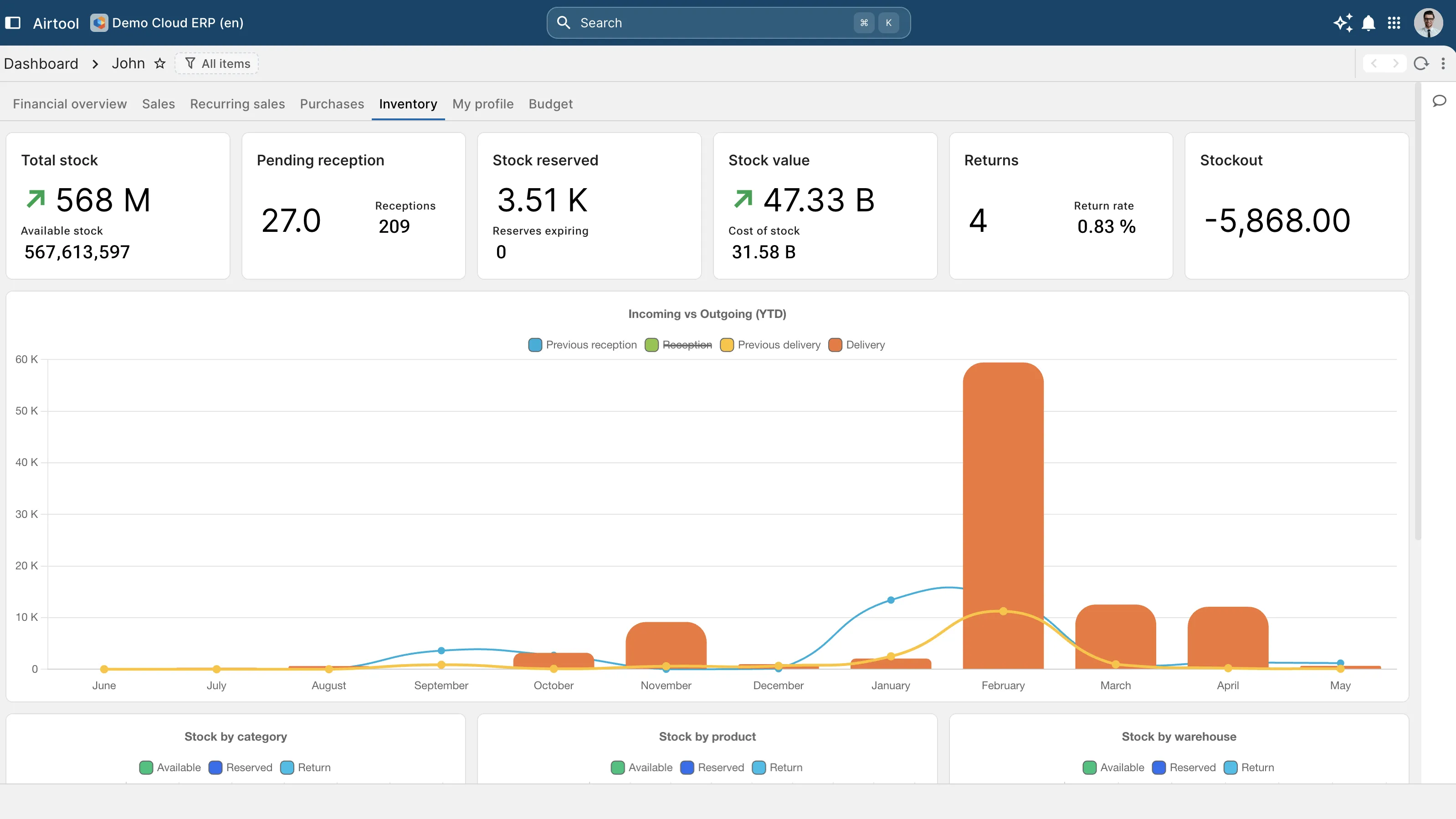
One ledger across sites
Stock at the bin, lot, serial and batch level — across multiple warehouses, storage zones and ownership structures — in one live ledger. Every movement audited.
Demand-driven replenishment
Reorder triggers, min/max policies, safety stock and supplier lead times configured per item. Replenishment proposals generated from live demand signals, not a nightly batch.
Native to procurement and WMS
An inventory increment is the same record a goods receipt updates and the same record three-way matches an invoice. WMS bin-level moves write directly to the same ledger.
AI-assisted forecasting
Demand forecasting inside the user's permission perimeter. Stock-out risk surfaced; replenishment proposals explained; every suggestion auditable.
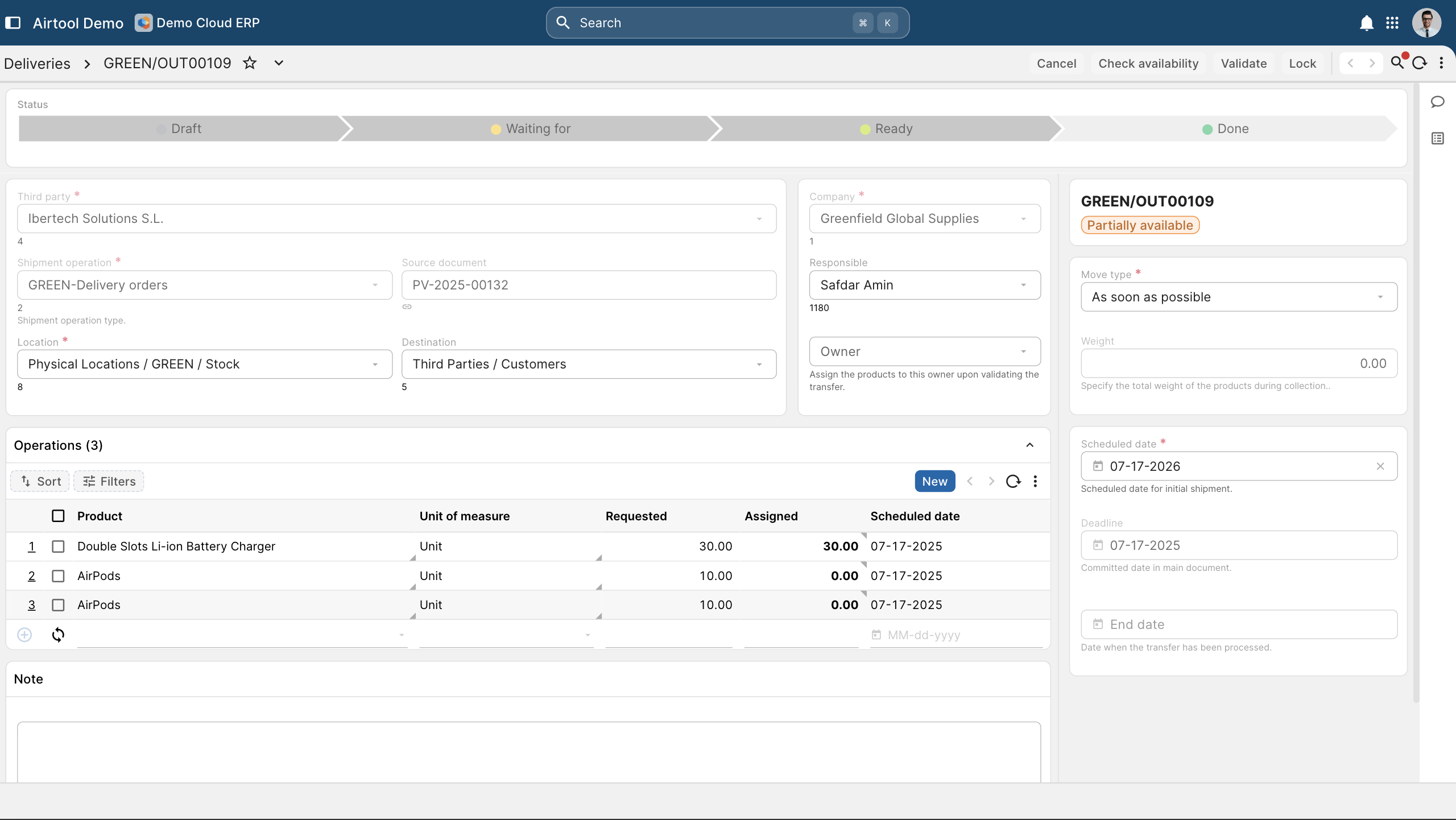
Live stock visibility across warehouses, locations and ownership.
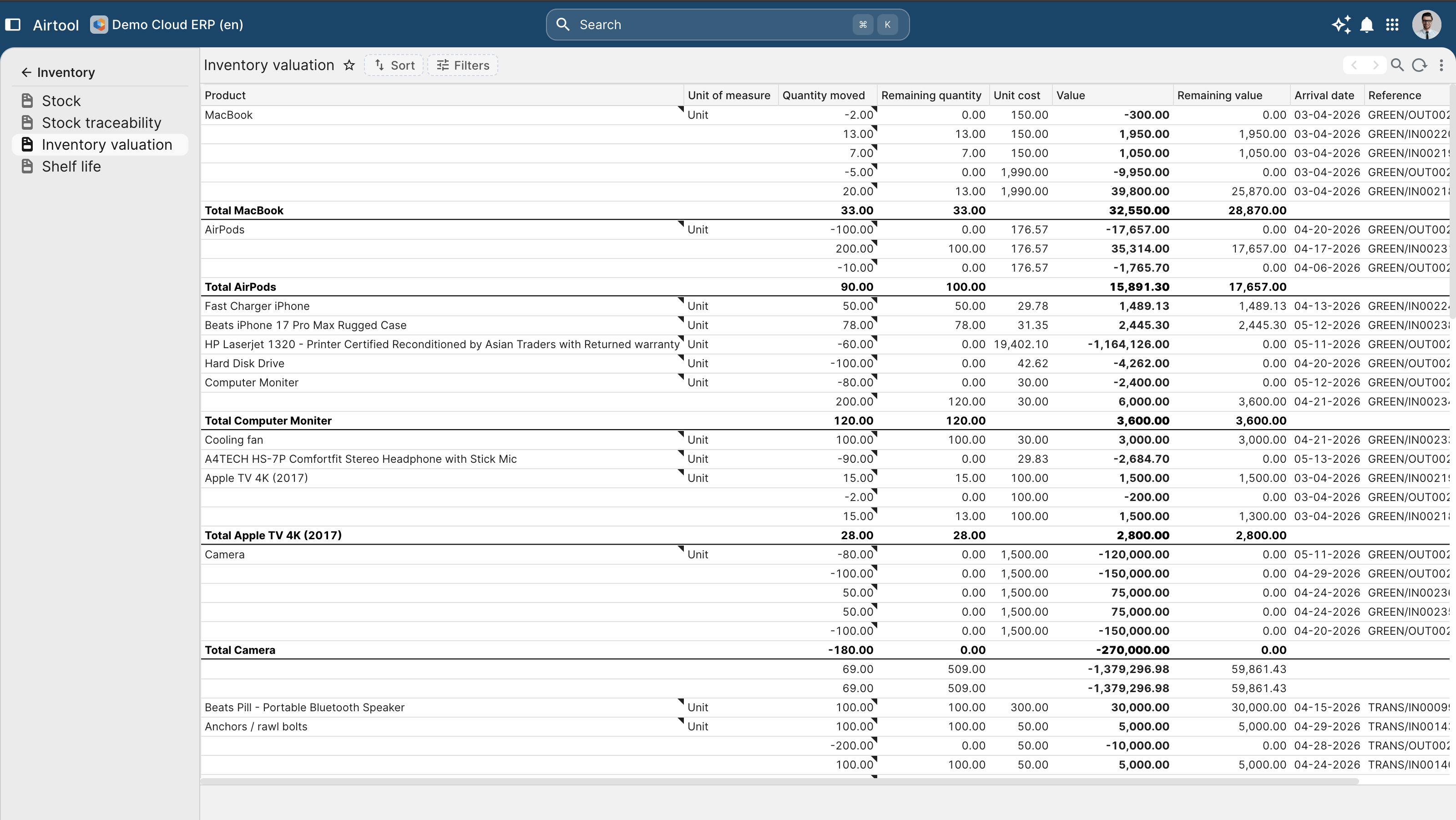
Stock segmented by warehouse, zone, bin, lot, serial and batch. Same record, different dimensions; the query language is the same. Lot and batch records carry expiry, country-of-origin, certification and ownership attributes. Serial-controlled items tracked individually from receipt to customer delivery. Available, reserved, allocated, in-transit, blocked, quarantine, customer-owned, consignment — modelled as states on the same ledger. Counts and reports respect state. FIFO, LIFO, weighted-average, standard-cost per item or per category. Revaluation flows to the GL through a controlled posting, not an end-of-month reconciliation.
- Multi-warehouse, multi-location ledger — Stock segmented by warehouse, zone, bin, lot, serial and batch. Same record, different dimensions; the query language is the same.
- Lot, serial and batch tracking — Lot and batch records carry expiry, country-of-origin, certification and ownership attributes. Serial-controlled items tracked individually from receipt to customer delivery.
- Stock states and ownership — Available, reserved, allocated, in-transit, blocked, quarantine, customer-owned, consignment — modelled as states on the same ledger. Counts and reports respect state.
- Inventory valuation — FIFO, LIFO, weighted-average, standard-cost per item or per category. Revaluation flows to the GL through a controlled posting, not an end-of-month reconciliation.
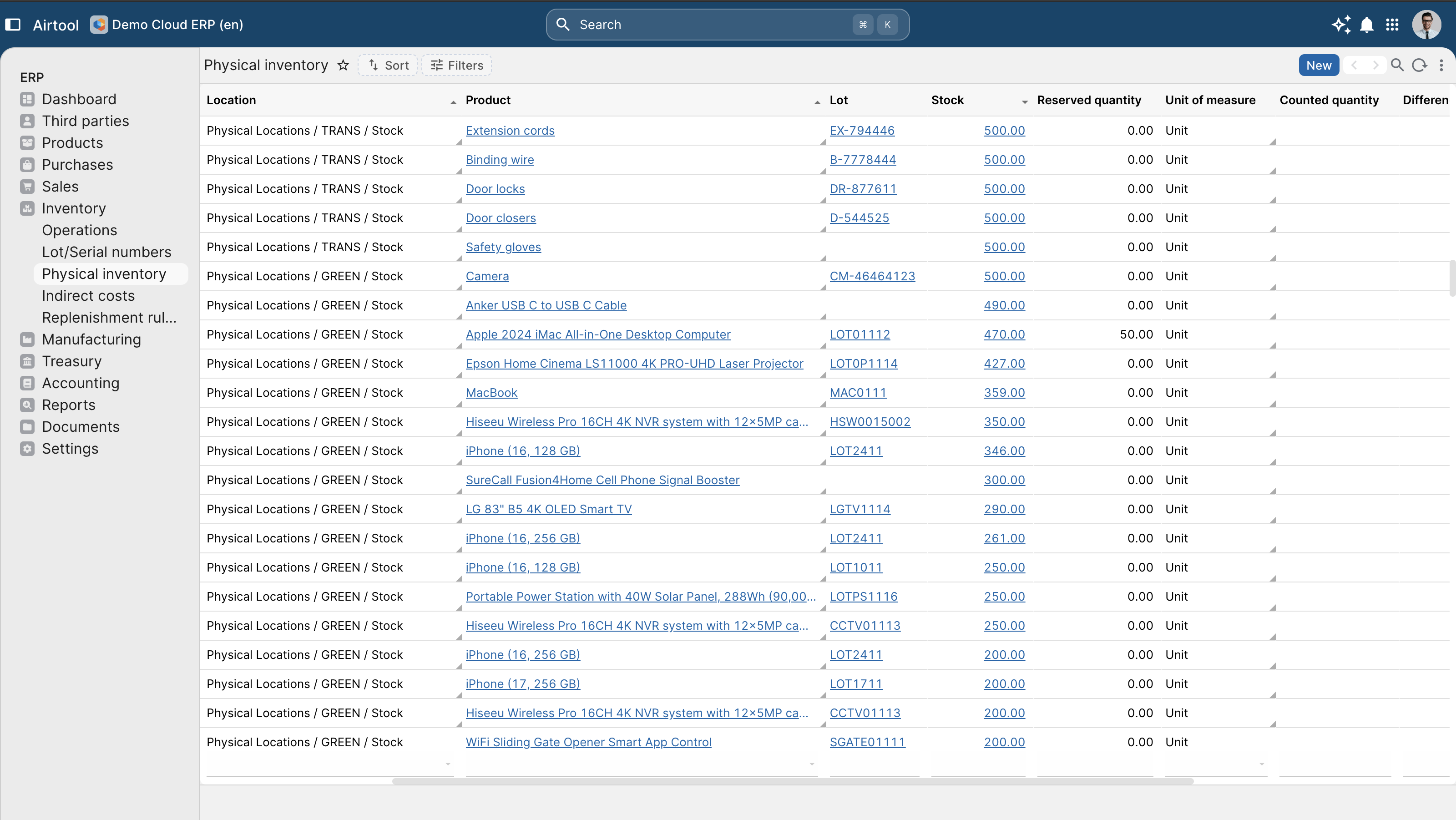
Replenishment that responds to live demand, not last month's average.
Configurable per item, per location and per supplier relationship. Reorder proposals generated as soon as the threshold is crossed. Forecast-driven replenishment with seasonality, promotional uplift and lead-time variability. Suggestions explainable; the buyer chooses, the engine learns. Lead times tracked per supplier, per item, per shipment lane. Promised delivery dates feed replenishment timing; missed promises feed the supplier scorecard. Safety stock policies — fixed, demand-percentile, service-level — configured per item or per ABC class. Adjustments applied on policy change, not by mass-edit.
- Reorder point and min/max — Configurable per item, per location and per supplier relationship. Reorder proposals generated as soon as the threshold is crossed.
- Demand-driven planning — Forecast-driven replenishment with seasonality, promotional uplift and lead-time variability. Suggestions explainable; the buyer chooses, the engine learns.
- Supplier lead-time integration — Lead times tracked per supplier, per item, per shipment lane. Promised delivery dates feed replenishment timing; missed promises feed the supplier scorecard.
- Safety stock policy engine — Safety stock policies — fixed, demand-percentile, service-level — configured per item or per ABC class. Adjustments applied on policy change, not by mass-edit.
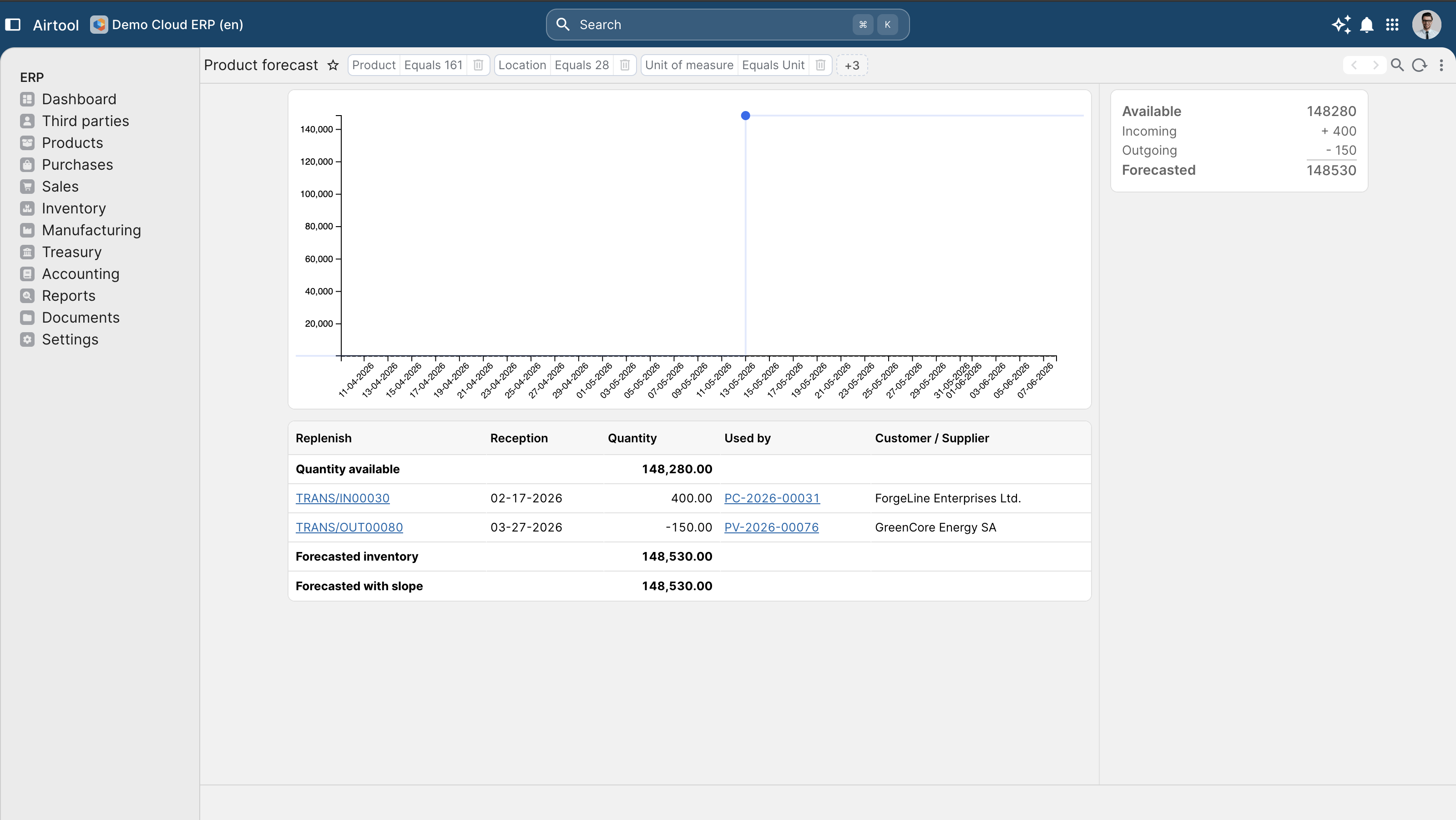
Total cost of ownership and product structure under one record.
Freight, duty, handling, insurance allocated across receipt lines on configurable rules — by weight, volume, value or fixed amount. Posts to the inventory cost as part of the receipt, not as a later journal. Bills of materials with versioning, effectivity dates, substitutions and configuration variants. The same BOM drives manufacturing planning, costing and reverse-logistics. Standard cost rolled up from BOM components and routing labour. Changes flag impact analysis before the new standard is released. Phantom assemblies, kit-on-demand and dummy items modelled in the BOM structure. The catalogue stays clean; the planning engine sees the real consumption.
- Landed cost allocation — Freight, duty, handling, insurance allocated across receipt lines on configurable rules — by weight, volume, value or fixed amount. Posts to the inventory cost as part of the receipt, not as a later journal.
- Multi-level BOM — Bills of materials with versioning, effectivity dates, substitutions and configuration variants. The same BOM drives manufacturing planning, costing and reverse-logistics.
- Rolled-up product cost — Standard cost rolled up from BOM components and routing labour. Changes flag impact analysis before the new standard is released.
- Phantom and dummy items — Phantom assemblies, kit-on-demand and dummy items modelled in the BOM structure. The catalogue stays clean; the planning engine sees the real consumption.
Dispatch, route planning and proof of delivery in one flow.
Dispatch from the warehouse with route, vehicle and driver assignment. Customer time-windows and delivery sequence captured for the driver in the mobile app. SEPA, freight forwarders, parcel carriers and own-fleet handled in one dispatch surface. Tracking number captured against the order; status visible to the customer. Signature, photograph and timestamp captured at delivery. POD attached to the sales order; invoice can release immediately on confirmation. Returns processed against the original order with stock reversal, credit note generation and refund execution as a single transaction.
- Dispatch and routing — Dispatch from the warehouse with route, vehicle and driver assignment. Customer time-windows and delivery sequence captured for the driver in the mobile app.
- Carrier integration — SEPA, freight forwarders, parcel carriers and own-fleet handled in one dispatch surface. Tracking number captured against the order; status visible to the customer.
- Proof of delivery — Signature, photograph and timestamp captured at delivery. POD attached to the sales order; invoice can release immediately on confirmation.
- Returns and reverse logistics — Returns processed against the original order with stock reversal, credit note generation and refund execution as a single transaction.
Built on the supervised platform.
The inventory ledger is the same metadata repository that runs ERP financials, sales, procurement and WMS. A goods receipt increments stock, accrues the liability and triggers three-way matching in one transaction. A pick decrements stock, allocates the sales order line, and audits to the outbound shipment — same record, same audit trail, no integration tax.